

Cayucos Pier: From Working Wharf to Fourth of July Fireworks
Whenever I see a pier, I feel the need to walk to the end. A pier lets us leave the shore without getting on a boat. With each step, the town grows quieter behind us, the ocean takes over the view and an ordinary walk begins to feel like a small escape.
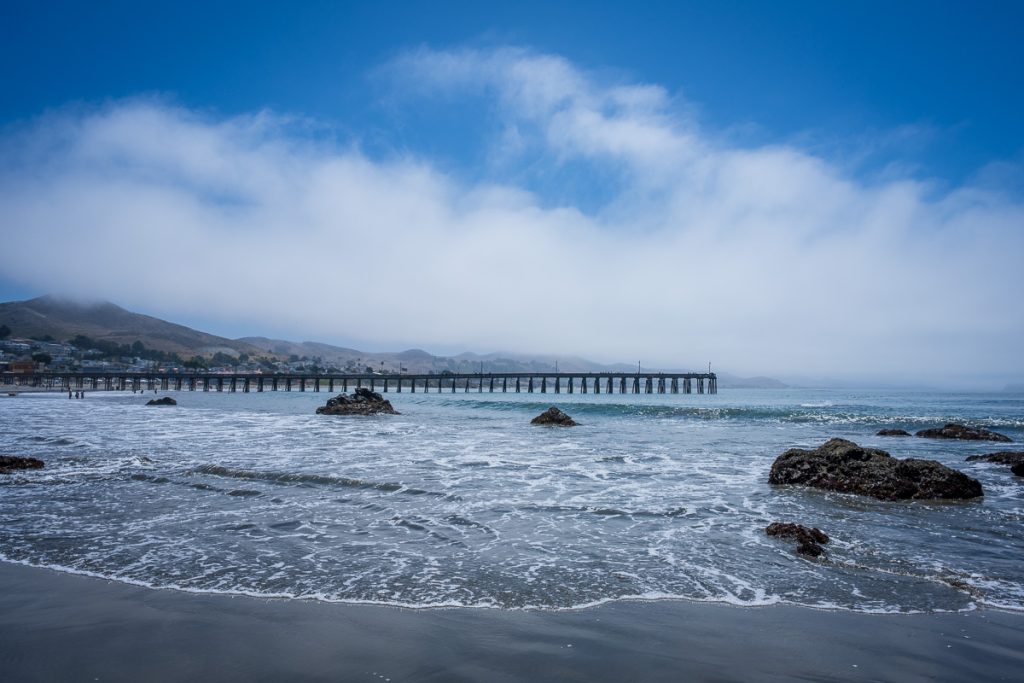
Cayucos Pier offers exactly that experience. Living just down the coast in Los Osos, I have come to appreciate how much the pier changes depending on when you visit. On a quiet morning, it belongs to fishermen, surfers and beach walkers. At low tide, the wooden pilings create reflections and natural leading lines. On a foggy day, the entire structure seems to disappear into the gray horizon.
Then there is the Fourth of July, when the same quiet pier becomes the center of Cayucos’s biggest annual celebration.
Cayucos Pier is easy to treat as a quick Highway 1 stop. You can park, walk to the end, take a photograph and leave. But the pier becomes more meaningful when you understand why it was built, how it helped create the town and why people still feel drawn to it more than 150 years later.
Short on Time? Cayucos Pier at a Glance
Cayucos Pier is a historic public fishing pier beside Cayucos State Beach and downtown Cayucos. Visit early in the morning for a peaceful walk or near sunset for warmer light and photography. Low tide offers the best opportunity to photograph the wooden pilings and reflections from the beach.
Best for: Ocean views, photography, fishing and beach walks
Best time: Early morning, low tide or sunset
Cost: Free to visit
Time needed: 30 to 60 minutes for the pier, or two to three hours with the beach and downtown
Location: Cayucos State Beach, steps from Ocean Avenue
Fourth of July: Fireworks are launched from the pier as part of the town’s annual celebration
For a broader look at the town, read my guide to the best things to do in Cayucos.
Is Cayucos Pier Worth Visiting?
Yes, Cayucos Pier is worth visiting, especially when you combine it with time on Cayucos State Beach and a walk through downtown.
It is not a large attraction with rides, shops or entertainment built onto it. Its appeal comes from its simplicity, its history and the changing activity around it.
Walk to the end for views across Estero Bay. Look back toward the old waterfront buildings and the hills behind town. Stop to watch surfers waiting for waves below, or head down to the beach to see the pier from beneath its weathered wooden pilings.
Cayucos feels quieter and less developed than many California beach towns, and the pier matches that personality. It gives you a reason to slow down rather than another attraction to check off a list.
From a Working Wharf to the Heart of Cayucos
Long before people came to Cayucos Pier for sunset walks, surfing and fireworks, it helped establish Cayucos as a working coastal town.
Captain James Cass arrived in the area in 1867. According to local historical accounts, he stopped near Cayucos Creek while transporting a shipment between San Luis Obispo and San Simeon and recognized the location’s potential as a shipping port.
At first, there was no wharf. Cargo had to be moved between the beach and schooners anchored offshore using high-sided surfboats.
One of the most memorable stories from this period is that Cass stacked incoming freight on piles of straw along the beach and sometimes slept beside it to keep it safe. Incoming shipments included lumber and manufactured goods, while dairy products, produce and livestock left the coast for larger markets.
It is hard to picture that scene now. The beach where families spread towels and surfers carry boards once held stacks of freight waiting to be moved between land and sea.
As the shipping business grew, Cass built a 380-foot wharf in 1873. In 1875, it was replaced by a 940-foot pier that allowed ships to dock alongside it rather than remain anchored farther offshore. A large warehouse was built at the end of the pier the following year. The early settlement was known as Cayucos Landing at Old Creek.
The pier did not merely serve a town that already existed. It helped create the conditions for Cayucos to grow.
Where Did the Name Cayucos Come From?
There are several theories about the origin of the name Cayucos.
The most widely accepted explanation is that it developed from the Hispanicization of a Chumash word referring to a kayak or canoe used for fishing in the bay, particularly around the kelp beds north of the present-day pier.
The town later took its name from Rancho Moro y Cayucos, a Mexican land grant awarded in 1842.
That origin feels especially fitting for a place shaped so deeply by the water. Long before the commercial landing or modern pier, people were already moving across this coastline in small boats and gathering food from the ocean.
How the Pier’s Purpose Changed
Cayucos continued to grow around its shipping trade, but transportation was changing.
As roads, rail service and the coastal highway developed, ships were no longer the most efficient way to move goods through the region. The commercial importance of the landing declined.
By 1923, the Cass warehouse and surrounding beachfront property had been sold to a development company with tourism in mind. In 1940, the State of California purchased the warehouse and beach area, helping transform the waterfront into a public recreational space.
The pier remained, but its purpose gradually changed.
Instead of carrying agricultural products and lumber, it began carrying fishermen, families, surfers, photographers and visitors walking toward the horizon.
That may be the most interesting part of its history. The pier did not disappear when its original purpose faded. Cayucos simply found new reasons to use it.
A Pier the Community Helped Save
Like many wooden structures exposed to the Pacific, Cayucos Pier has endured decades of storms, saltwater and structural deterioration.
The pier closed in 2013 because of safety concerns and underwent a major reconstruction project. Community members contributed to the approximately $3.5 million restoration, and the rebuilt pier reopened in 2015.
That effort says something about the relationship between Cayucos and its pier. It is not simply aging infrastructure. It is part of the town’s identity and a place where generations of memories have accumulated.
Pacific storms can still cause temporary closures or limit access to portions of the structure. Check current conditions after severe weather rather than assuming the entire pier will always be open.
Why Are We Drawn to Piers?
A pier is a path, but it does not lead to another town or attraction. It simply leads outward and stops.
That may be why we slow down when we reach the end.
We lean against the railing, look for wildlife, watch fishing lines disappear into the water or follow surfers waiting for the next wave. We could watch the ocean from the beach, but standing above it changes the experience.
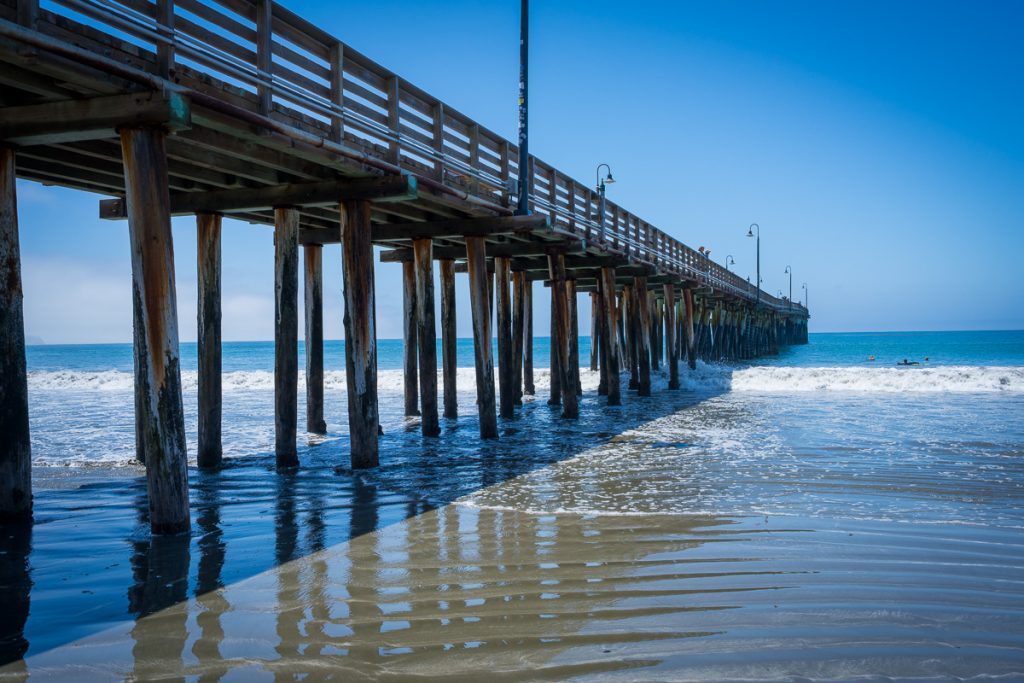
A pier places us between two worlds. We remain connected to land, yet we are surrounded by water. The town is behind us and the open ocean is ahead.
For photographers, the long lines, repeating pilings and open horizon create natural compositions. For everyone else, a pier offers a simple way to step away from town without actually going very far.
It also gives us a destination without demanding that we accomplish anything once we arrive. The reward is not reaching the end. It is stopping there for a while.
Best Time to Visit Cayucos Pier
There is no single best time to visit because the experience changes throughout the day.
Early Morning
Early morning is my favorite time for a quiet walk.
You may see fishermen setting up their lines, surfers gathering near the pier and locals walking the beach before the town becomes busier. The light is softer, parking is usually easier and the waterfront has a slower rhythm.
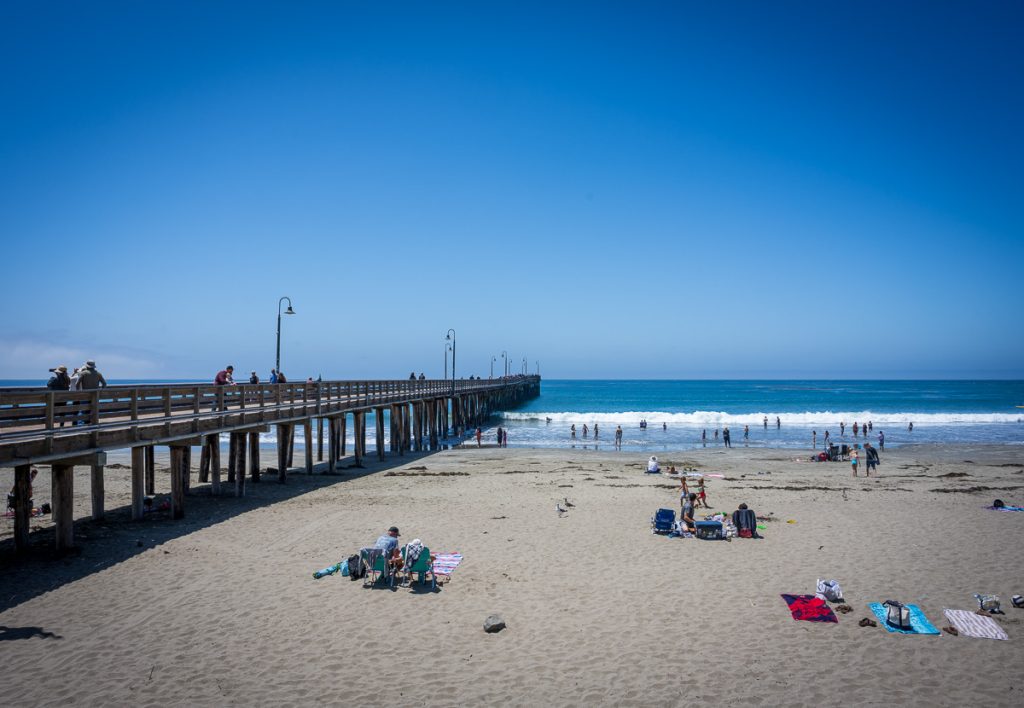
Summer mornings can be foggy or overcast. Do not automatically consider that bad weather. Fog gives Cayucos a moodier quality that feels true to this part of the Central Coast.
Late Afternoon and Sunset
Late afternoon is better for warm light and a livelier atmosphere.
From the beach, the pier becomes a silhouette against the western sky. The pilings create long shadows, and wet sand may reflect both the structure and sunset colors.
Arrive at least 30 minutes before sunset so you have time to walk onto the pier, check the tide and explore both sides of the beach.
Stay after the sun disappears. The light during blue hour can be just as beautiful, especially when the pier lights begin to glow.
Low Tide
Low tide creates more room to explore the beach and photograph the pier from below.
As the water retreats, it can leave a thin reflective surface across the sand. The pilings become stronger visual elements, and you may be able to position yourself beneath the structure without standing in the water.
Always check the tide before visiting and pay attention to incoming waves. A route that looks dry and accessible can change quickly as the tide rises.
Foggy Days
Cayucos is often beautiful beneath a layer of coastal fog.
Fog reduces visual clutter and softens the horizon, making the weathered wood stand out. It can work especially well for minimalist or black-and-white photographs.
A dramatic sunset is never guaranteed on the Central Coast. The pier still offers texture, symmetry, silhouettes and atmosphere when the sky remains gray.
My Favorite Cayucos Pier Photography Views
Cayucos Pier can be photographed from several angles, but each side offers something different. Before choosing a composition, walk the shoreline and notice how the tide, waves, fog, and light are shaping the scene.
From the North Side of the Pier
The north side is my favorite place to photograph Cayucos Pier.
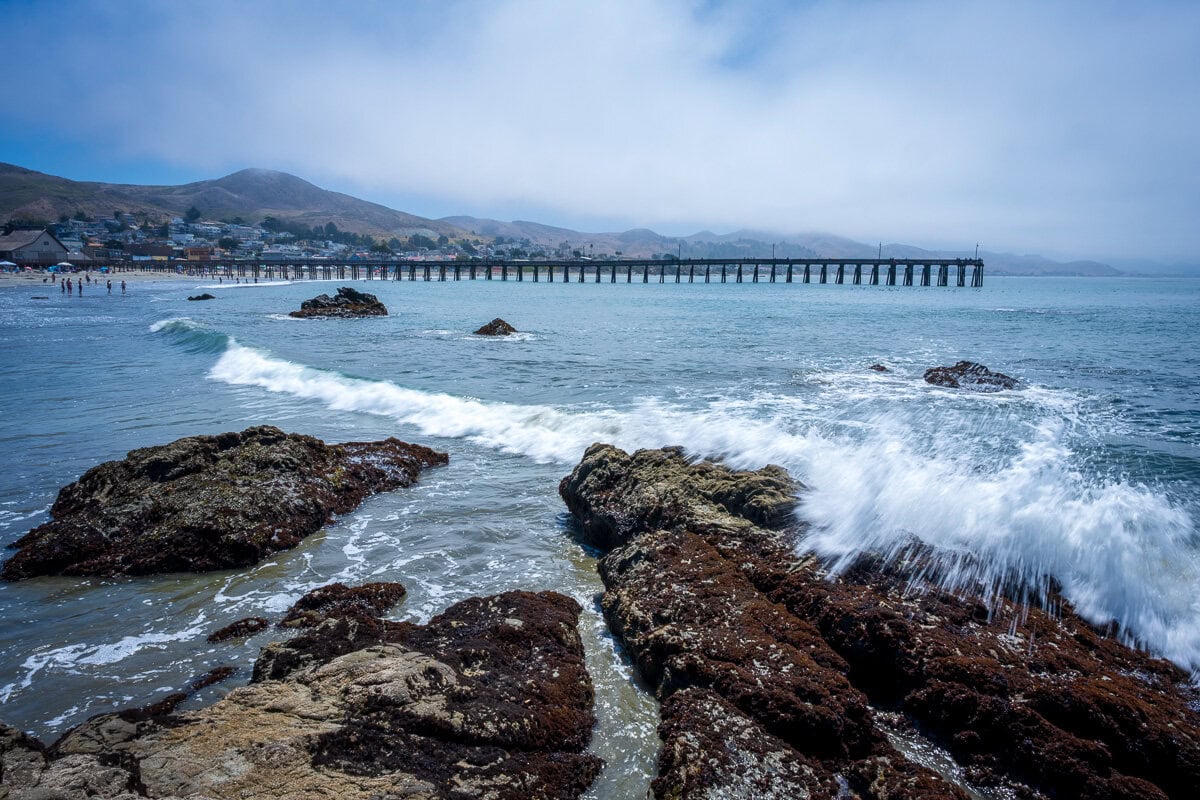
Clusters of dark rocks create natural foreground elements, adding depth and leading the eye toward the pier. When waves break over them, the scene becomes even more dynamic. You can freeze the splash with a faster shutter speed or slow the exposure slightly to soften the water around the rocks.
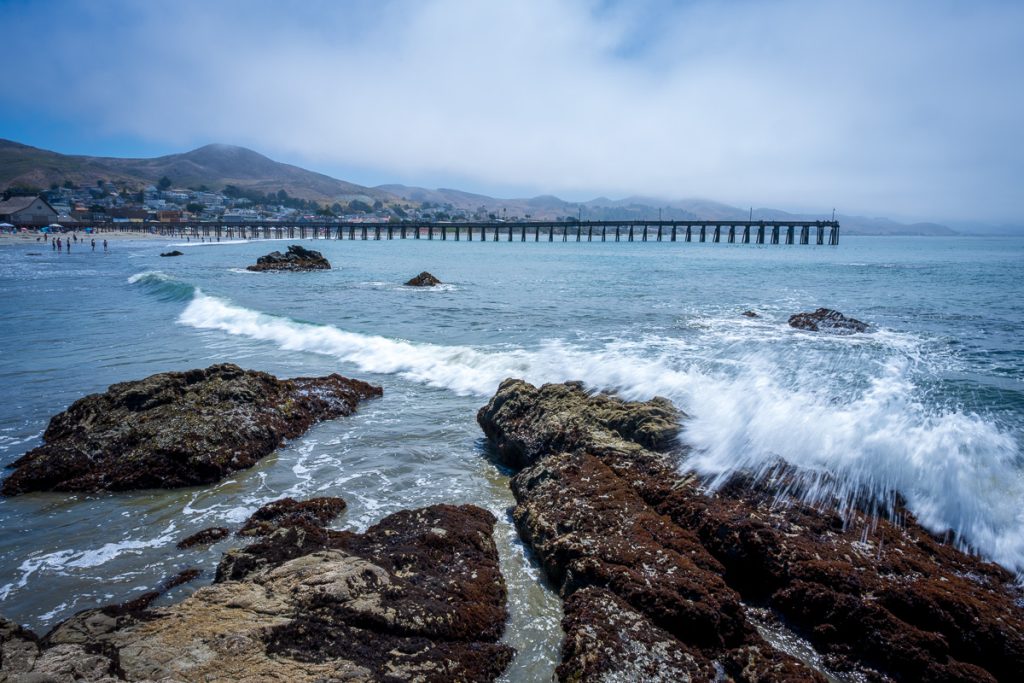
This viewpoint also includes the waterfront buildings, coastal hills, and drifting fog, making the image feel like a portrait of Cayucos rather than simply a photograph of the pier.
A mid-to-lower tide usually reveals more of the rocks, but they can be slippery, and incoming waves can reach farther than expected.
From the South Side
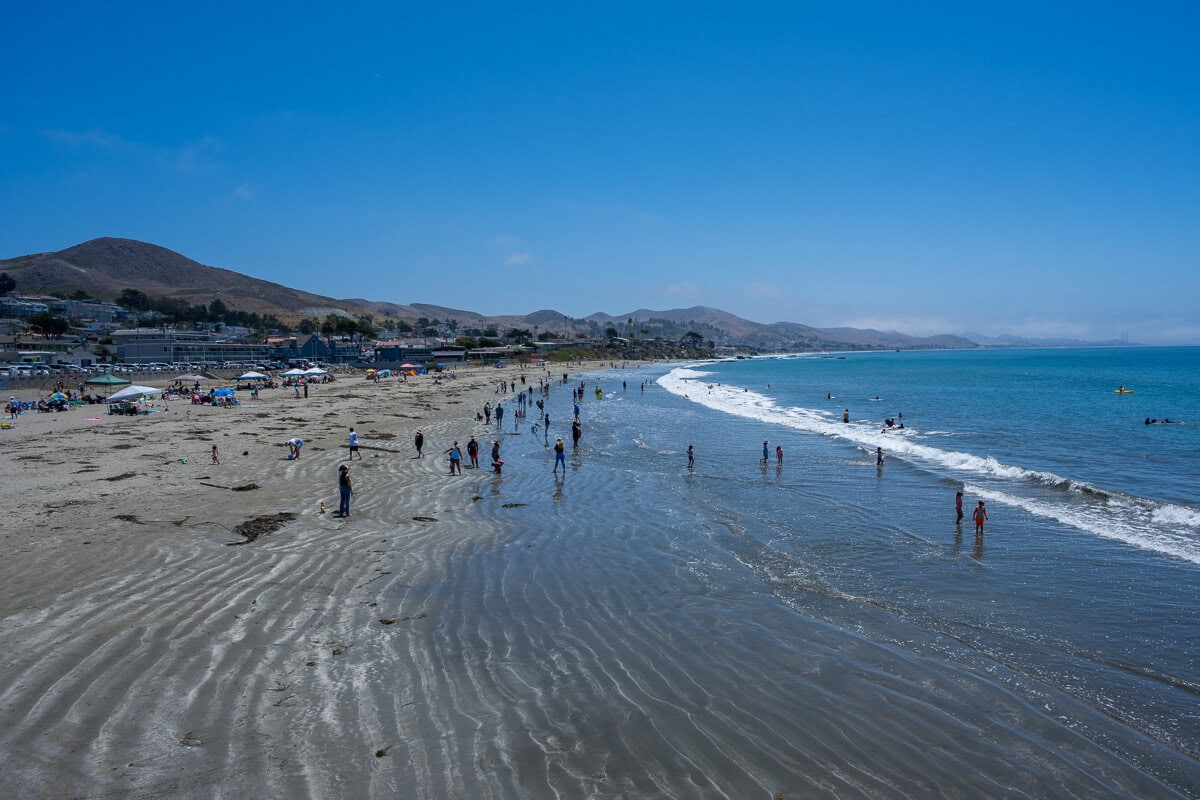
The south side offers a cleaner view of the full pier against a wide stretch of sand.
It works particularly well during late afternoon and sunset, when the structure can become a silhouette against the sky. At lower tide, wet sand may also create reflections around the pilings.
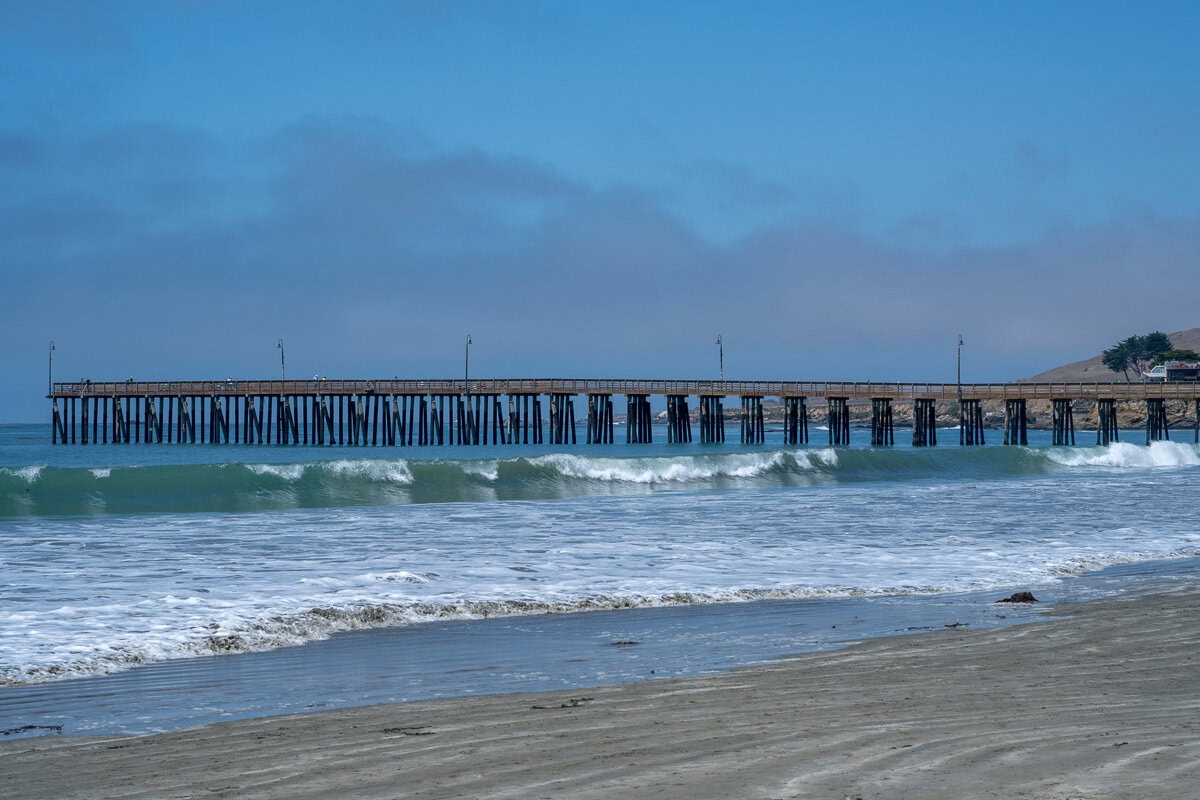
This side is a good place to include surfers in the frame. A person carrying a surfboard or waiting beside the pier adds scale and helps show how large the structure really is.
Photographing Surfers Around the Pier
When the waves are good and surfers are out, I can spend a long time simply following them through my lens. There is something meditative about watching them wait, paddle, catch a wave, and disappear behind the pier before coming back into view.
A telephoto lens lets you photograph surfers beneath the pier, between the pilings, or moving alongside its full length. Including both the surfer and the structure adds a sense of scale that is difficult to capture in an empty landscape.
Rather than focusing only on the action, look for quieter moments too: surfers sitting beyond the break, carrying their boards along the water, or waiting beneath the repeating lines of the pier.
Beneath the Pier
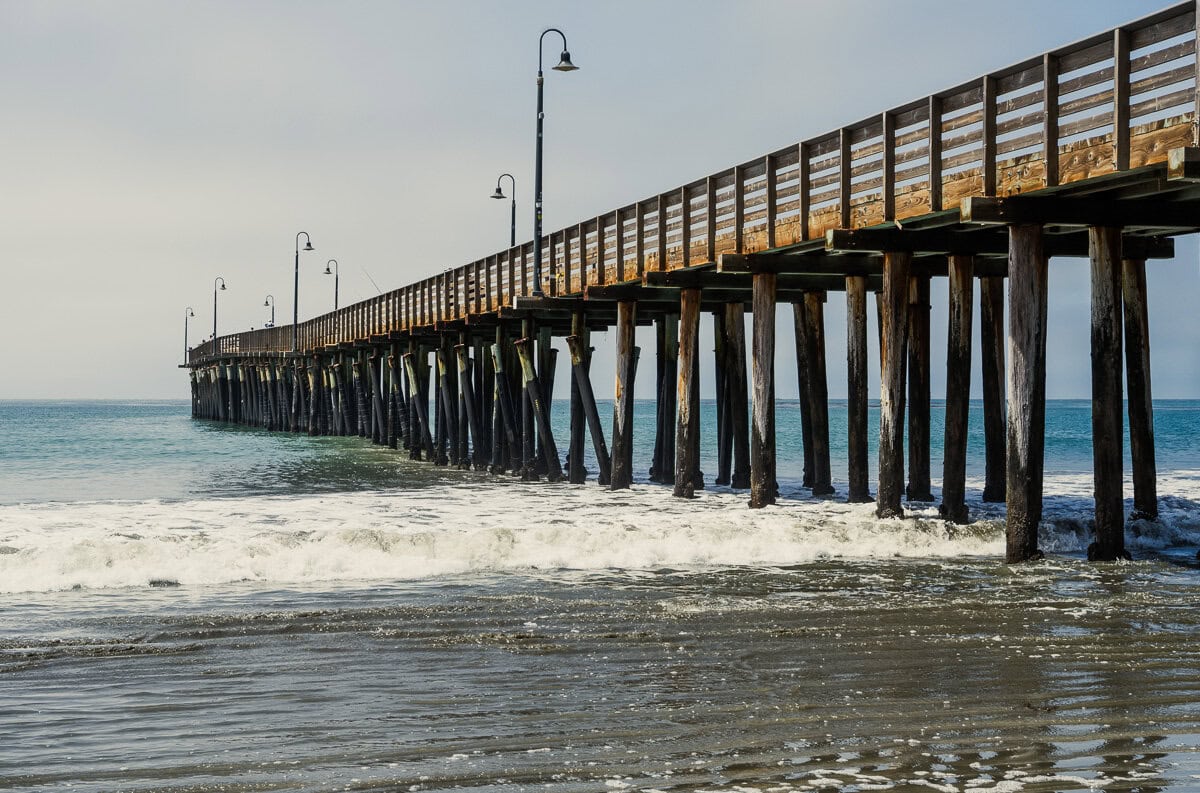
The wooden pilings create one of the pier’s most recognizable compositions.
A centered view emphasizes symmetry, while moving slightly to one side creates more depth. A wide-angle lens works well here, especially when you include foam, ripples, or reflections in the foreground.
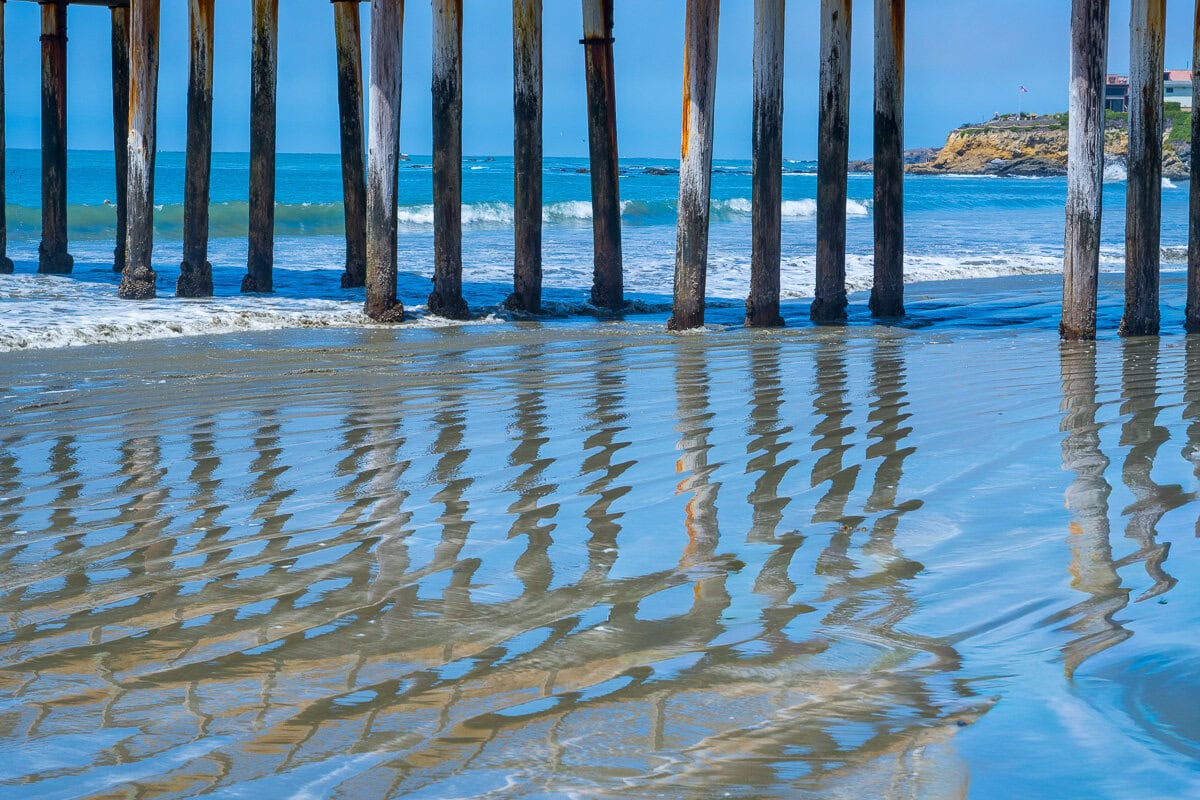
Low tide usually provides more room to move around, but avoid standing beneath the structure during rough surf or a rising tide.
From the Pier Looking Back Toward Town
When you reach the end of the pier, turn around.
The view back toward Cayucos shows the waterfront buildings, beach, and rounded hills layered behind one another. Fog drifting through the hills or late-afternoon light across town can make this perspective especially atmospheric.
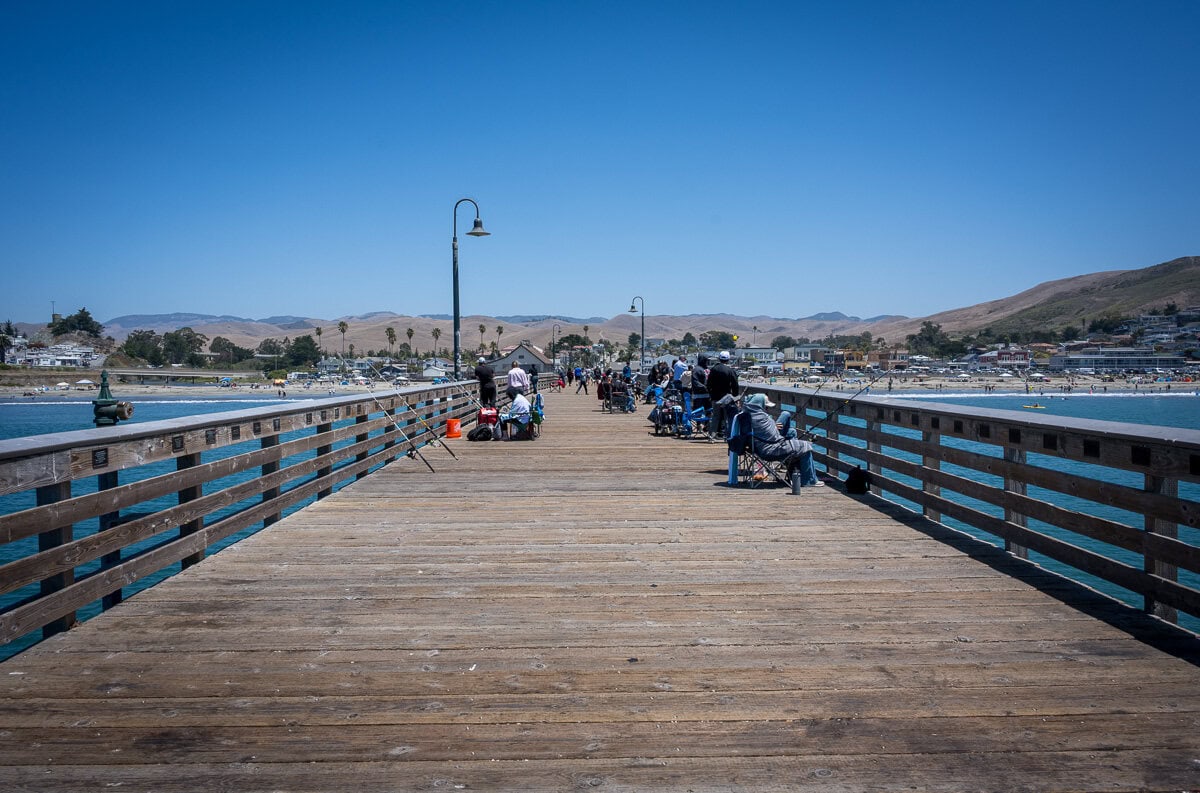
People walking the deck, fishermen leaning against the railings, and birds resting on the pier can add life and a sense of place.
From Farther Along the Shoreline
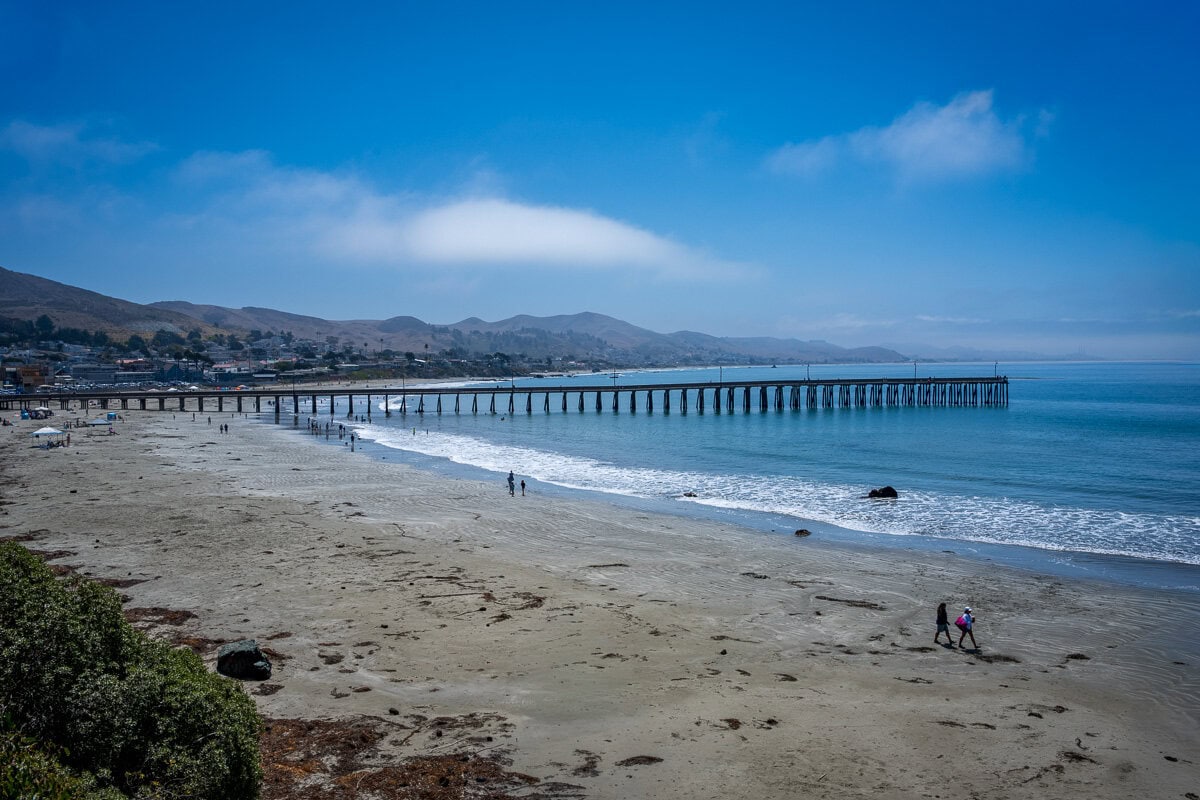
Moving farther away allows the pier to become part of the wider landscape.
A longer lens can compress the scene, bringing the pier, town, and hills visually closer together. A wider view gives more attention to the surf, sky, fog, and foreground.
This is often the best approach when the surrounding conditions are more interesting than the pier itself. Instead of isolating the landmark, you show how it belongs to the beach, town, hills, and changing Central Coast weather.
Cayucos Pier on the Fourth of July
Most days, Cayucos Pier offers a way to step away from town and look toward the horizon.
On the Fourth of July, the direction reverses. The entire town looks back toward the pier.
Cayucos hosts one of the Central Coast’s best-known Independence Day celebrations. The annual event typically includes an early-morning sand sculpture contest, a hometown parade, the Front Street Faire, a Lions Club barbecue and fireworks launched from the pier around 9 p.m.
I have visited Cayucos more times than I can count, but I have not experienced its Fourth of July celebration in person yet. I do not want to pretend that I can offer firsthand crowd or photography advice.
What I can say is that this is not the day to expect the usual peaceful Cayucos experience. Thousands of people visit, parking becomes extremely limited and the quiet shoreline transforms into an all-day community celebration.
Arrive early, park only in legal spaces and plan to remain in town rather than trying to drive in shortly before the fireworks. Bring layers because evenings beside the ocean can become cold, even in July.
For the full schedule, parking information and additional planning advice, read my guide to the Cayucos Fourth of July celebration.
How I Would Spend Two or Three Hours at the Pier
Start by walking onto the pier to check the wind, waves and overall conditions.
Pause to watch the surfers and look for marine life before walking back toward the beach. If the tide is low enough, photograph or explore around the pilings. Then wander Ocean Avenue for coffee, food, cookies, antique shopping or a quick look at the historic downtown.
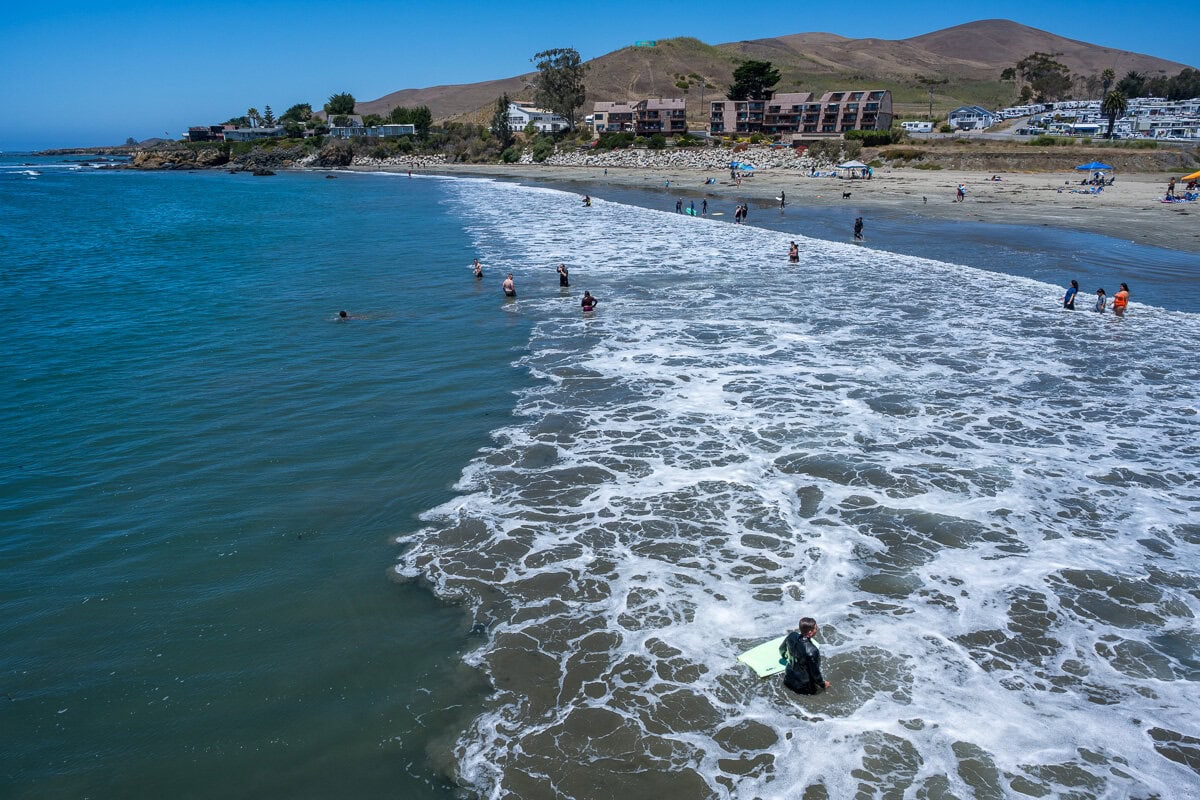
Return to the beach when the light begins to change.
That second look often produces a completely different experience. The tide may have moved, the fog may have lifted and the afternoon light may reveal reflections or details that were not visible when you arrived.
This slower approach is how I prefer to experience Cayucos. The town does not need a complicated itinerary. It rewards leaving space in the day.
Planning Your Visit
Cayucos Pier sits beside Cayucos State Beach at the end of the town’s walkable downtown area.
Parking is available near the waterfront and along surrounding streets. The closest spaces can fill on summer weekends, holidays and event days, so arriving earlier usually makes the visit easier.
Allow 30 to 60 minutes for a simple walk to the end and back. Give yourself two to three hours if you want to photograph the beach, watch the surfers, explore downtown and stop for food.
There is no admission fee to walk the pier.
A California sport-fishing license is not required when recreationally fishing from a qualifying public ocean pier. However, all other regulations still apply, including size limits, bag limits, seasons and gear restrictions. Fishing from the beach is different and generally requires a license for anyone age 16 or older.
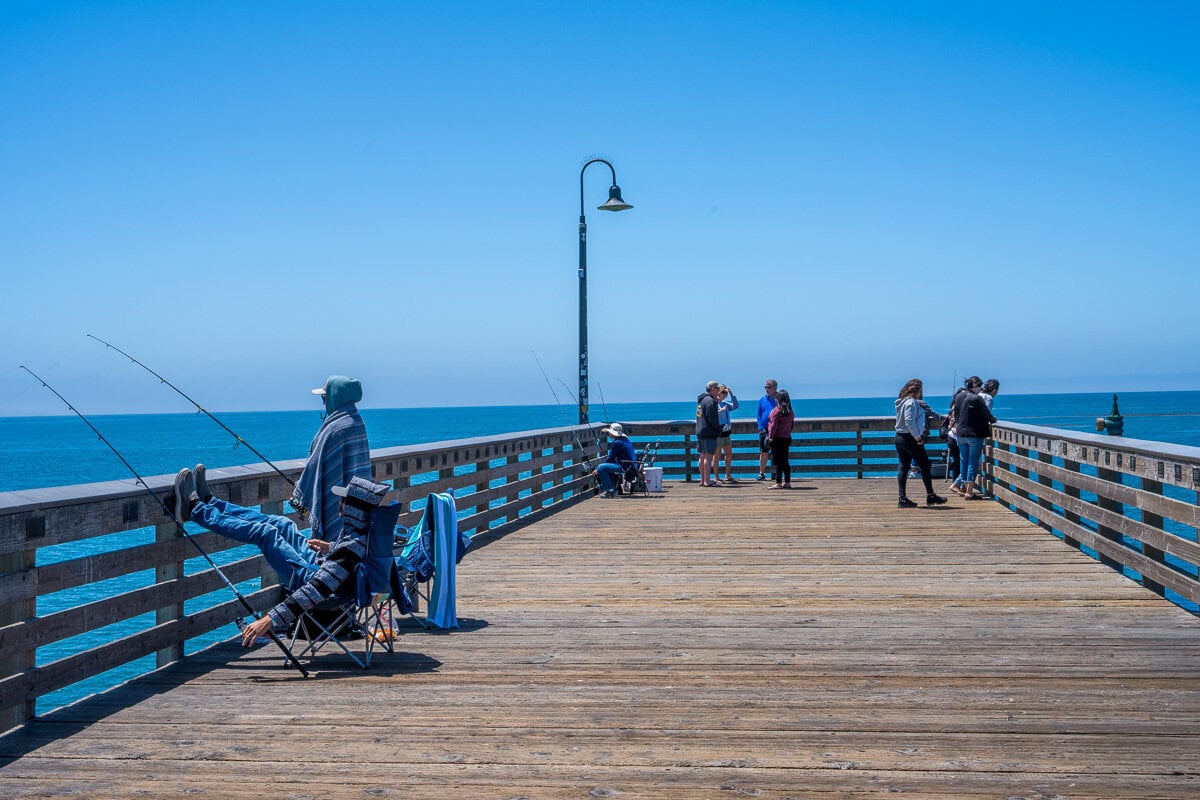
After major storms, check current access before making a special trip. Repairs or safety concerns can occasionally close all or part of a California pier.
Cayucos Pier vs. Pismo Beach Pier
Cayucos and Pismo Beach offer two very different pier experiences.
Pismo has a broader promenade, more surrounding activity and the energy of a busier beach destination. Cayucos feels smaller, quieter and more connected to an old-fashioned coastal town.
I do not think one is necessarily better. They simply suit different moods.
Choose Cayucos when you want a slower walk, weathered wood, surfers, fog and an unfussy small-town atmosphere. Choose Pismo when you want a larger beach, more dining options, a developed boardwalk and a livelier waterfront.
My complete Pismo Beach Pier guide covers what to see, where to walk and how to plan a visit there.
Adding Cayucos to a Highway 1 Road Trip
Cayucos makes an easy stop between Morro Bay and Cambria.
You can walk the pier and explore downtown in a few hours, or stay longer and add Cayucos State Beach, Estero Bluffs or nearby coastal viewpoints.
Travelers continuing north can use my Big Sur travel guide to plan the next section of Highway 1, including scenic stops, hiking options and places to stay.
Cayucos may not have the dramatic cliffs of Big Sur or the busy waterfront of Pismo Beach. That is part of its appeal. It offers a quieter pause between the Central Coast’s better-known destinations.
Cayucos Pier Frequently Asked Questions
Is Cayucos Pier free?
Yes. There is no admission fee to walk onto the public pier.
How much time do you need?
Allow 30 to 60 minutes for the pier alone. Two to three hours gives you time to walk the beach, take photographs, explore downtown and stop for food.
Can you fish from Cayucos Pier without a license?
A California sport-fishing license is not required when recreationally fishing from a qualifying public ocean pier. All other fishing regulations still apply.
When is the best time to photograph the pier?
Early morning is best for quieter conditions. Sunset provides warmer light and silhouettes, while low tide creates better access to the pilings and the possibility of reflections in wet sand.
Are Fourth of July fireworks launched from the pier?
Yes. Cayucos traditionally holds a public fireworks show from the pier as part of its annual Fourth of July celebration. Check the current year’s official schedule before planning your visit.
Final Thoughts
Cayucos Pier is easy to underestimate.
At first, it appears to be a simple wooden structure extending from a small Central Coast town. Walk onto it, however, and you begin to understand how much of Cayucos’s story leads back to this spot.
It began as infrastructure that allowed ships to reach the shoreline and helped the town grow. It carried agricultural products, dairy goods, lumber and the ambitions of a new coastal community.
Today, it carries fishermen setting up their lines, surfers checking the waves, families walking toward the horizon and photographers waiting for the light to change.
On most days, it offers a quiet place to step away from town. On the Fourth of July, it becomes the place toward which the entire community turns.
The pier no longer sends cargo toward distant cities, but it still gives people a reason to walk outward, stop and look.